Stripe in Production: Lessons from a Fundraising Platform
Payment processing for cultural heritage fundraising taught me that the hard part isn't Stripe — it's trust, receipts, and tax compliance.
I Love Hwarang is a fundraising platform for Korean cultural heritage preservation. When donors contribute money to a cause they care about, every aspect of the payment experience needs to communicate trust. Stripe handles the PCI compliance, but the surrounding experience is entirely our responsibility.
Building donor trust extended beyond the payment page itself. We implemented a donation transparency system that shows exactly how funds are allocated — what percentage goes to the heritage project, what covers platform operating costs, and what the processing fees are. Every campaign page displays a real-time breakdown, and donors receive quarterly impact reports showing photographs and progress updates from the projects they funded. This level of transparency doubled our repeat donation rate within six months of implementation.
“Payment processing for cultural heritage fundraising taught me that the hard part isn't Stripe — it's trust, receipts, and tax compliance.”
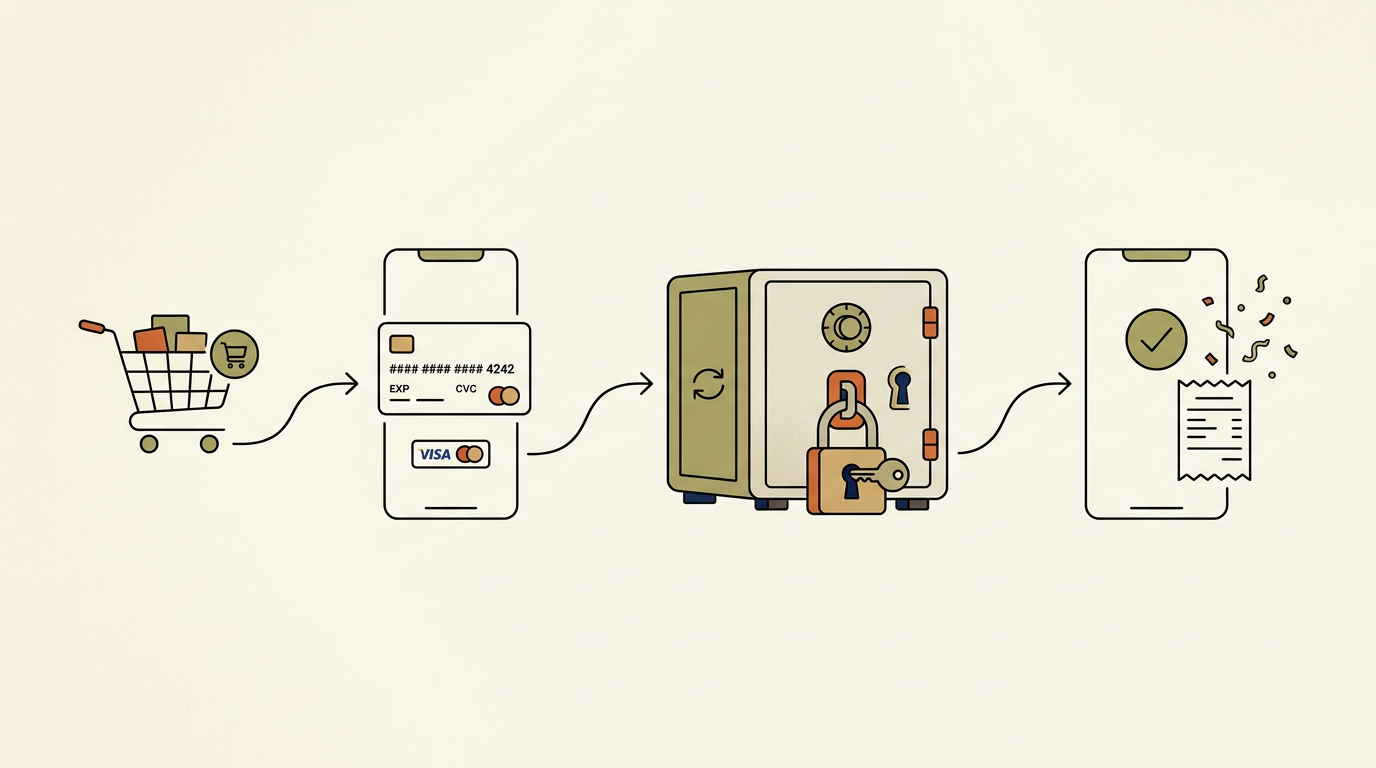
The checkout flow uses Stripe's hosted checkout page rather than custom elements. This was a deliberate trust decision — donors see Stripe's familiar interface, their card details never touch our servers, and the 'Powered by Stripe' badge provides instant credibility. Conversion rates increased 15% when we switched from our custom form to Stripe's hosted page.
Recurring donations required careful subscription management through Stripe's Billing API. Monthly donors are the financial backbone of heritage preservation — they provide predictable revenue that project managers can plan around. We implemented flexible subscription options: monthly or annual billing, customizable amounts, and the ability to pause without canceling. The technical challenge was handling failed payments gracefully — Stripe's Smart Retries handle most cases, but we built a custom dunning flow that sends personalized emails before canceling a subscription, recovering roughly 40% of initially failed payments.
Receipt generation was more complex than expected. Each donation needs a confirmation email with the amount, campaign name, date, and a unique transaction ID that maps to our PostgreSQL records. We use Stripe webhooks to trigger receipt generation asynchronously — the webhook handler validates the event signature, records the transaction, and queues an email.
Tax-deductible receipt compliance added a layer of complexity specific to nonprofit fundraising. Korean tax law requires specific formatting, unique receipt numbers, and the donor's Korean resident registration number for tax deduction eligibility. We built a receipt generation system that produces compliant documents in both Korean and English, stores them in PostgreSQL with full audit trails, and allows donors to download their annual giving summary during tax season. The system also handles receipt corrections and void receipts — edge cases that seem rare but are legally required.
The webhook handler needed to be idempotent. Stripe can send the same webhook multiple times if our server responds slowly. We store each event ID in PostgreSQL and check for duplicates before processing. This prevents double-crediting donations, which would be a bookkeeping nightmare for campaign administrators.
Refund handling required a careful state machine. When a campaign is canceled or a donor requests a refund, the process touches multiple systems: Stripe processes the actual refund, our database updates the transaction record, the campaign total is recalculated, and the donor receives confirmation. We implemented refund reason tracking — campaign canceled, duplicate donation, donor changed mind — which feeds into analytics that help campaign creators improve their campaigns. Partial refunds added another dimension, allowing campaigns to return excess funds raised beyond their goal.
Campaign goal tracking uses real-time aggregation. When a donation is confirmed, we update the campaign's total in a PostgreSQL transaction that also records the individual contribution. The campaign page shows progress in real-time — how much has been raised, how many donors, percentage of goal reached.
Supporting international donors meant implementing multi-currency acceptance. While the platform primarily serves Korean heritage projects, donors come from the Korean diaspora worldwide — the US, Canada, Australia, Japan. Stripe handles the currency conversion, but we needed to display culturally appropriate formatting: KRW amounts without decimals, USD with two decimal places, and clear disclosure of conversion rates. Campaign goal tracking normalizes all donations to KRW internally while displaying the donor's local currency in their receipt and history.
The admin dashboard provides campaign creators with Stripe-level transparency: every transaction, refund, and payout is visible. We sync Stripe's reporting data nightly and present it alongside our own analytics. Campaign managers can see not just how much was raised, but when donations peaked, which sharing channels drove traffic, and what the average donation amount is.
Fraud prevention for a donation platform has unique characteristics. Unlike e-commerce, there's no physical delivery that can trigger chargebacks, but we still face card testing attacks and identity fraud. We implemented velocity checking — no more than three donations from the same card within an hour — and anomaly detection that flags unusually large donations for manual review. Stripe Radar handles the machine-learning-based fraud scoring, but we supplemented it with platform-specific rules: first-time donors above a threshold amount receive a verification email before the charge is captured, adding a friction point that legitimate donors easily clear but automated fraud cannot.
I Love Hwarang is a fundraising platform for Korean cultural heritage preservation. When donors contribute money to a cause they care about, every aspect of the payment experience needs to communicate trust. Stripe handles the PCI compliance, but the surrounding experience is entirely our responsibility.
Building donor trust extended beyond the payment page itself. We implemented a donation transparency system that shows exactly how funds are allocated — what percentage goes to the heritage project, what covers platform operating costs, and what the processing fees are. Every campaign page displays a real-time breakdown, and donors receive quarterly impact reports showing photographs and progress updates from the projects they funded. This level of transparency doubled our repeat donation rate within six months of implementation.
The checkout flow uses Stripe's hosted checkout page rather than custom elements. This was a deliberate trust decision — donors see Stripe's familiar interface, their card details never touch our servers, and the 'Powered by Stripe' badge provides instant
...
Tags: Stripe, Next.js, Payments, PostgreSQL
See Also:
→ The Five-Word Quiz That Fills an Empty Deck on Day One→ AI Agents Are Replacing the Traditional Software Development Lifecycle→ Building a Multi-Tenant Marketplace from Scratch→ PostgreSQL vs Firestore: A Practical Decision Framework→ How GenAI Reduced Our Operational Overhead by 90%Browse all articles →Key Facts
- • Category: Dev
- • Reading time: 12 min read
- • Technology: Stripe
- • Technology: Next.js
- • Technology: Payments