Digitizing a Paper-Based Business: Building ERP from Zero
When I joined Decoy International, everything ran on paper. Five years later, every operation was automated. This is the technical story.
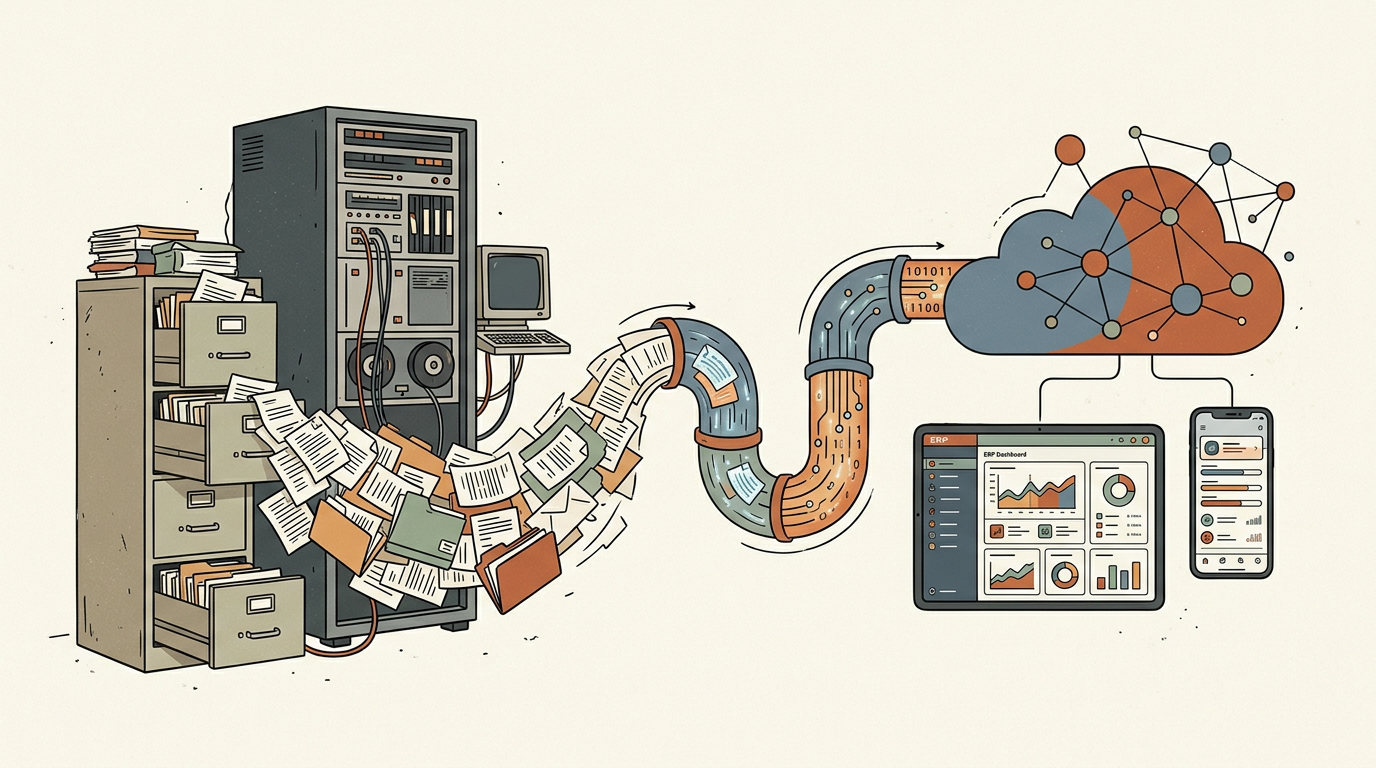
Decoy International was a successful fashion wholesale company running entirely on paper when I arrived in 2014. Purchase orders were handwritten. Inventory was tracked in spreadsheets that were always wrong. Returns were managed with sticky notes. My job was to change all of that.
The biggest obstacle wasn't technical — it was organizational resistance. Warehouse workers had managed inventory their way for years, and asking them to scan barcodes felt like adding bureaucracy. I learned to deploy new systems alongside existing workflows first, letting teams see the digital version's accuracy before retiring the paper process. This parallel-run approach took longer but achieved buy-in that a hard cutover never would have.
“When I joined Decoy International, everything ran on paper. Five years later, every operation was automated. This is the technical story.”
The first system I built was inventory management. The paper-based system had a fundamental problem: no one knew what was actually in the warehouse. I designed a centralized inventory database with MySQL, added barcode scanning for receiving and shipping, and built a visual warehouse map that showed exactly which rack held which product.
The barcode system required careful physical infrastructure. We selected Zebra industrial label printers for generating product labels and Honeywell ring scanners for hands-free warehouse operation. Each product received a unique barcode at receiving, linking to its database record with purchase order, supplier, size run, color, and warehouse location. The ring scanners connected to ruggedized Android tablets mounted on picking carts, giving workers real-time feedback on scan accuracy and pick completion status.
The visual warehouse mapping was a game-changer. Instead of workers wandering the warehouse looking for products, the picking system generated optimized routes — shortest path through the aisles for each order. This alone improved fulfillment speed by 70%.
Order management was the module that immediately showed ROI. Previously, sales reps took orders on paper forms, faxed them to the office, and someone manually entered them into spreadsheets. Errors were constant — wrong sizes, wrong quantities, wrong prices. The digital order system let reps enter orders on tablets during buyer meetings, with real-time inventory checks that prevented overselling and automatic price calculations based on the buyer's negotiated terms.
The ERP grew module by module: inventory first, then order management, then production tracking, then financial reporting. Each module integrated with the others. When a purchase order was entered, inventory was updated. When items shipped, the financial module recorded the revenue. No more manual data entry between systems.
The financial reporting module connected everything upstream. Purchase orders, receiving records, shipments, and returns all fed into automated cost-of-goods calculations. Before the ERP, the accountant spent two weeks each month reconciling spreadsheets to produce financial statements. After integration, monthly financials were generated automatically with drill-down capability from high-level numbers to individual transactions. We also built QuickBooks export functionality, which let the accounting team continue using their familiar tools while the data flowed from our system.
The hardest part was the production management system. Decoy manufactured in China, and communication with factory partners was chaotic — emails, WeChat messages, phone calls, all containing critical information about fabric sourcing, production timelines, and quality issues. I built a centralized platform where every work order, sample approval, and quality report lived in one place.
Quality control tracking closed a major gap in the production workflow. When goods arrived from Chinese factories, inspectors checked samples against specifications and recorded defects. Previously, this data lived in email threads and was effectively lost. The QC module captured inspection results with photo evidence, linked defects to specific production runs, and generated supplier scorecards. Over time, these scorecards became powerful negotiation tools — we could show factory partners their defect rates trending up and tie it to specific production changes.
Migrating historical data from spreadsheets was its own project. Five years of business data lived across hundreds of Excel files with inconsistent formatting, duplicate entries, and missing fields. I built a Python-based ETL pipeline that normalized addresses, deduplicated customer records using fuzzy matching, and validated product codes against our master catalog. The migration took three months and required constant collaboration with the operations team to resolve ambiguities — but having historical data in the system was critical for reporting accuracy.
After five years, the company operated with zero paper. Every process — from placing a purchase order to tracking a return — was digital, automated, and auditable. The system I built was still running when I left, handling every transaction for a multi-million dollar operation.
Decoy International was a successful fashion wholesale company running entirely on paper when I arrived in 2014. Purchase orders were handwritten. Inventory was tracked in spreadsheets that were always wrong. Returns were managed with sticky notes. My job was to change all of that.
The biggest obstacle wasn't technical — it was organizational resistance. Warehouse workers had managed inventory their way for years, and asking them to scan barcodes felt like adding bureaucracy. I learned to deploy new systems alongside existing workflows first, letting teams see the digital version's accuracy before retiring the paper process. This parallel-run approach took longer but achieved buy-in that a hard cutover never would have.
The first system I built was inventory management. The paper-based system had a fundamental problem: no one knew what was actually in the warehouse. I designed a centralized inventory database with MySQL, added barcode scanning
...
Tags: ERP, Digital Transformation, PHP, MySQL
See Also:
→ The Five-Word Quiz That Fills an Empty Deck on Day One→ AI Agents Are Replacing the Traditional Software Development Lifecycle→ Building a Multi-Tenant Marketplace from Scratch→ PostgreSQL vs Firestore: A Practical Decision Framework→ How GenAI Reduced Our Operational Overhead by 90%Browse all articles →Key Facts
- • Category: Dev
- • Reading time: 16 min read
- • Technology: ERP
- • Technology: Digital Transformation
- • Technology: PHP